
Nepal – a country that holds the world’s highest peaks, ancient living civilizations, and spiritual landscapes found nowhere else on Earth – stands at a defining crossroads in its tourism journey. While the natural and cultural wealth is undeniable, translating that wealth into a consistently world-class visitor experience remains a work in progress.
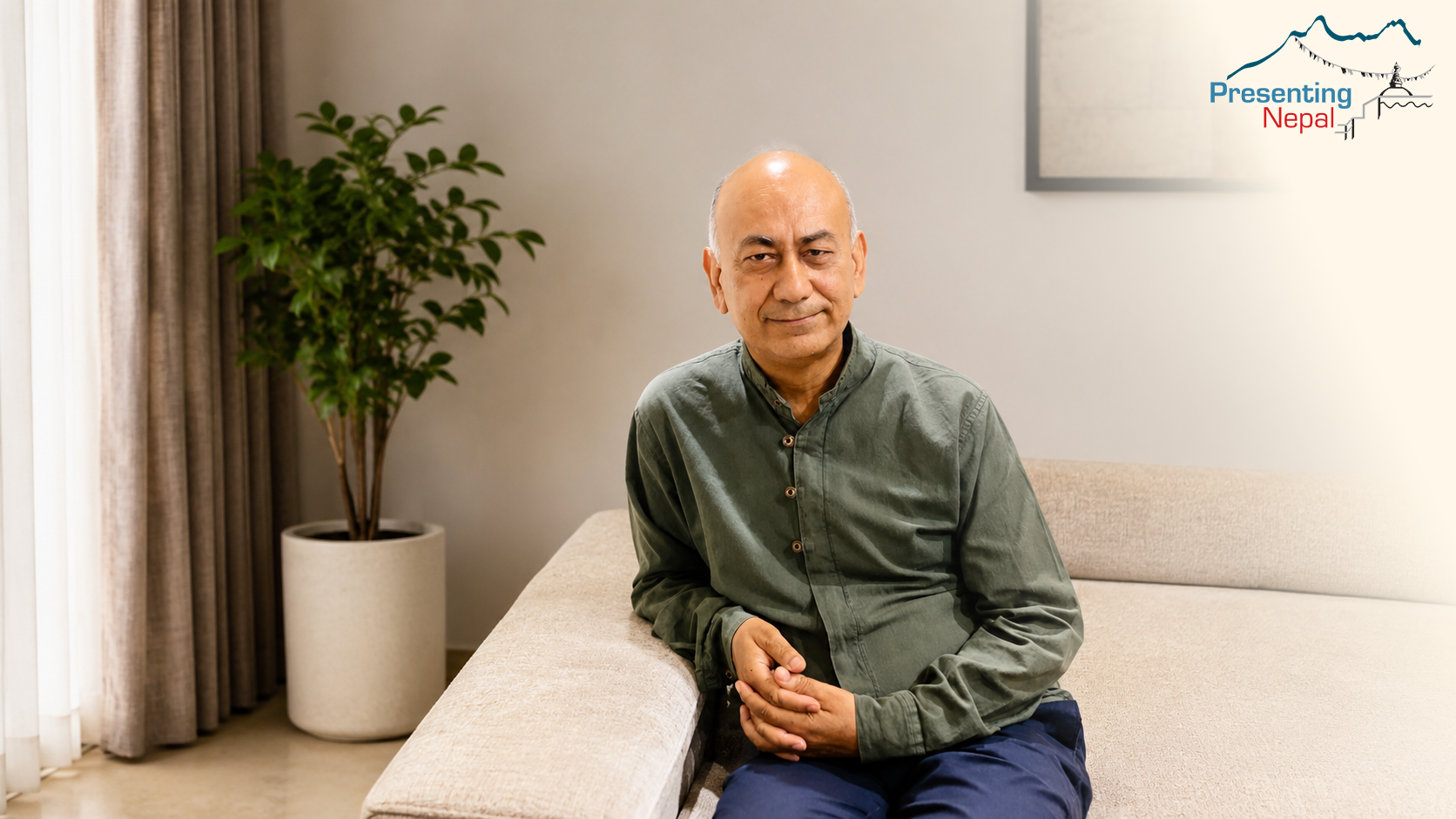
To understand where Nepal’s tourism industry stands today and where it must go, we sat down with Sarad Pradhan – former Media Chief of the Nepal Tourism Board (NTB), a media researcher, and a celebrated sahityakar (literary writer). His insights span decades of experience at the intersection of journalism, policy, and destination promotion.
Q1: How Do You See the Current Condition of Nepal’s Tourism Industry?
Q: You have worked as the former Media Chief of Nepal Tourism Board and are also deeply involved in media research and literature. Based on your long experience, how do you see the current condition of Nepal’s tourism industry today?
Sarad Pradhan: Nepal’s tourism industry today is alive, resilient, and full of potential – but it suffers from uneven quality, infrastructure deficits, and under-leveraged data. The next leap forward requires moving from being a destination of “magnificent scenery and recurring problems” to one of “smart, sustainable, and seamless travel.” That transformation will demand more than beautiful campaigns – it needs rigorous media research, agile policy, and honest storytelling.
Context: Nepal’s Key Tourism Destinations
Nepal’s tourism sector has shown remarkable resilience. The country’s flagship draw – the Himalayan mountain range, including Mount Everest (Sagarmatha), the world’s highest peak at 8,848.86 m – continues to attract trekkers, climbers, and spiritual seekers from around the globe. Key destinations include:
- Kathmandu Valley – Home to seven UNESCO World Heritage Sites including Pashupatinath Temple, Boudhanath Stupa, Swayambhunath (Monkey Temple), and the medieval Durbar Squares of Kathmandu, Patan, and Bhaktapur.
- Pokhara – Nepal’s adventure tourism capital, nestled beside Phewa Lake against the dramatic Annapurna Range. Gateway to the Annapurna Circuit, ABC Trek, paragliding, and whitewater rafting.
- Chitwan National Park – A UNESCO World Heritage Site home to the one-horned rhinoceros, Bengal tiger, and extraordinary birdlife.
- Lumbini – Birthplace of Siddhartha Gautama, the Buddha; a UNESCO World Heritage Site and one of Asia’s most sacred pilgrimage sites.
- Mustang – The ancient Forbidden Kingdom; a high-altitude desert landscape famous for cave monasteries, Tibetan culture, and dramatic canyons of the Kali Gandaki River.
- Humla – Nepal’s gateway to the sacred Mount Kailash and Lake Mansarovar pilgrimage in Tibet, growing rapidly in international significance.
Q2: What Role Should Media Play in Promoting Nepal Tourism in the Digital Era?
Q: In your opinion, what role should media play in promoting Nepal tourism in today’s digital era, and how important are social media and independent content creators for tourism promotion?
Sarad Pradhan: In the digital era, the media’s role in promoting Nepal’s tourism is no longer to be the source of the story, but the facilitator of a global conversation about Nepal. Social media and independent creators are not just important – they are the main channels through which modern travelers decide where to go next. The question for Nepal is not whether to use them, but how to do so strategically, ethically, and measurably – without losing the authentic soul that makes Nepal truly unique.
Why This Matters: The Shift in Travel Decision-Making
Research consistently shows that today’s travelers – particularly millennials and Gen Z – rely on user-generated content (UGC), influencer travel blogs, YouTube vlogs, Instagram reels, and TikTok travel content far more than traditional advertising when choosing a destination. A single viral video of the Thorong La Pass, a stunning drone reel over Phoksundo Lake in Dolpo, or an authentic cultural story from the Newari festivals of Kathmandu Valley can generate hundreds of thousands of organic impressions at zero media spend.
Key Recommendations for Nepal’s Digital Media Strategy
- Partner with credible travel content creators – not just high-follower influencers, but trust-based niche voices.
- Develop a national content library that operators, journalists, and creators can freely access.
- Invest in media monitoring and analytics to understand which narratives drive actual bookings.
- Support local Nepali creators who tell Nepal’s story from the inside out.
Q3: How Has Tourism Changed – Past vs. Present?
Q: Looking back at the tourism industry of the past and comparing it with today’s tourism trends, what major differences do you see in travelers, tourism marketing, and destination promotion?
Sarad Pradhan: The past decade has seen Nepal’s tourism industry move from a sellers’ market – where travelers came because Nepal was unique and options were limited – to a buyers’ market, where travelers have hundreds of destinations, instant information, and high expectations. The destinations that thrive today are not necessarily the most beautiful – but the most responsive, credible, and emotionally intelligent in their marketing and on-the-ground delivery.
“Nepal still holds the cards of natural and cultural wonder. But in today’s tourism landscape, wonder alone is no longer enough.”
The Evolution of the Nepal Traveler: Then vs. Now
| Dimension | Past (Pre-2010s) | ||
| Information Source | Guidebooks (Lonely Planet), travel agents | Instagram, YouTube, Google, AI travel tools | |
| Traveler Profile | Predominantly Western trekkers & mountaineers | Diverse: South Asian, East Asian, adventure, spiritual, luxury | |
| Booking Behavior | Planned months ahead via travel agents | Spontaneous bookings, online platforms, last-minute deals | |
| Expectations | Roughing it was part of the experience | Seamless connectivity, quality accommodation, safety assurance | |
| Marketing Medium | Print brochures, travel fairs, TV features | Social media, influencers, YouTube, AI-driven personalization | |
| Key Decision Factor | Destination uniqueness | Peer reviews, trustworthiness, value for money, safety | |
| Focus of Promotion | Scenery and adventure | Experiences, culture, sustainability, authenticity | |
Q4: What Are the Biggest Challenges Holding Nepal Back?
Q: Nepal has huge tourism potential in culture, nature, adventure, and spirituality. What are the biggest challenges stopping Nepal from becoming a stronger international tourism destination?
Sarad Pradhan: Nepal does not lack potential – it lacks systematic execution. The raw materials of culture, nature, adventure, and spirituality are world-class. The countries that succeed in international tourism are not necessarily the most gifted by geography or history. They are the ones that remove friction, build trust, and deliver consistently on their promise.
The Seven Core Challenges Facing Nepal Tourism
- Infrastructure Gaps – Road networks, airport capacity outside Tribhuvan International Airport, and last-mile connectivity to remote destinations remain underdeveloped. Mountain airstrips serving Lukla, Jomsom, and Simikot operate under weather-dependent constraints that create chronic uncertainty for travelers.
- Inconsistent Service Quality – From five-star properties in Kathmandu to tea houses on the Everest trail, service quality varies enormously. Training, standardization, and hospitality education need sustained investment.
- Over-Dependence on a Few Destinations – Most tourism revenue is concentrated in the Kathmandu-Pokhara-Chitwan triangle. Extraordinary destinations like Rara Lake, Dolpo’s Phoksundo Lake, Lo Manthang in Upper Mustang, and Bardiya National Park remain dramatically under-promoted.
- Environmental and Overtourism Pressures – Popular trails like Everest Base Camp and the Annapurna Circuit face increasing waste management and ecological impact concerns. Sustainable permit systems and conservation funding need urgent strengthening.
- Limited Data and Research Culture – Tourism policy and marketing in Nepal have historically been driven more by instinct than evidence. Robust visitor data, market segmentation, and real-time analytics are underutilized.
- Branding Inconsistency – Nepal’s brand message has lacked consistency. A clear, sustained national brand narrative is needed following the disruption of Visit Nepal 2020.
- Political and Governance Instability – Frequent government changes affect the continuity of tourism policy, long-term investment, and institutional memory within the NTB and related bodies.
“The opportunity is immense – and the window to seize it is now.”
Q5: A Message for Young Nepali Storytellers and Content Creators
Q: As a media researcher, tourism expert, and sahityakar (writer), what message would you like to give to the younger generation who want to contribute to Nepal tourism through media, storytelling, photography, and digital content creation?
“Be curious, not certain. The best stories emerge from not knowing.”
“Be humble, not loud. Let the mountains and the people be the heroes.”
“Be persistent, not impatient. Changing how the world sees Nepal is the work of a generation, not a season.”
He added with characteristic warmth:
“Young friend, the path is hard. You will face low pay, creative burnout, algorithm changes, and occasional indifference. But you will also stand at the edge of a rice terrace at golden hour and realize: I am the one who gets to tell this. And that is a privilege no algorithm can give and no crisis can take away. Go. Create. But create with conscience. Nepal is waiting – not for more noise, but for more truth.”
A Practical Roadmap for Aspiring Nepal Tourism Storytellers
- Start local, think global – Document your own village, festival, or trail. A photo essay on Mustang’s salt traders or a blog on the Great Himalaya Trail carries genuine global appeal.
- Learn the craft, not just the tools – Instagram and YouTube are platforms, not skills. Invest in narrative writing, documentary filmmaking, and audience analytics.
- Build credibility over virality – One deeply researched story on Bardiya National Park’s tiger conservation does more for Nepal’s brand than ten shallow viral posts.
- Collaborate with communities – Ethical content involves, not exploits, the communities being depicted. Always seek consent and share credit.
- Engage with institutions – The Nepal Tourism Board and private sector operators need skilled media partners. Approach them professionally with a portfolio.
Conclusion: Nepal’s Tourism Transformation Begins With Truth
Nepal’s tourism future will not be written in boardrooms or ad agencies alone. It will be written – frame by frame, post by post, story by story – by a generation of Nepali voices who love their country deeply enough to show it as it truly is: flawed and magnificent, ancient and dynamic, challenging and irresistibly worth it.
Nepal does not need more noise. It needs more truth, consistency, and courage – in policy, in practice, and above all, in storytelling. Come to Nepal. And when you leave, help tell its story.
About the Interviewee
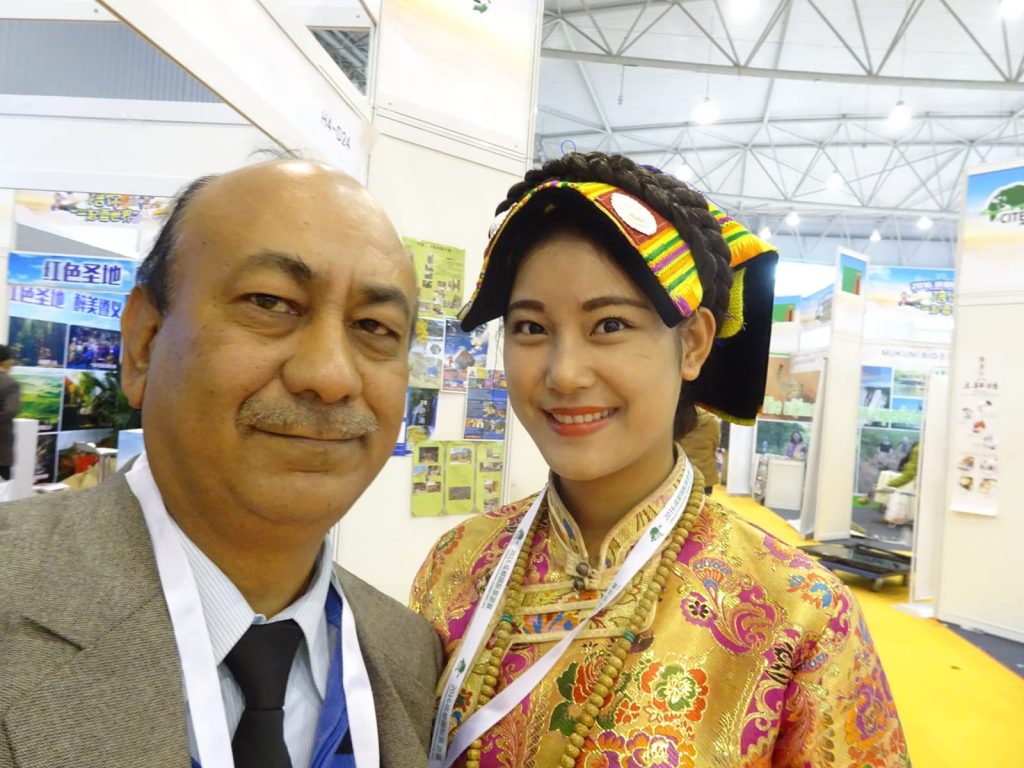
Sarad Pradhan is a former Media Chief of the Nepal Tourism Board (NTB), a media researcher, and a renowned Nepali sahityakar (literary writer). With decades of experience at the intersection of journalism, tourism policy, and literature, he is one of Nepal’s most respected voices on destination branding, media strategy, and cultural storytelling.


