


Imagine waking up to a golden sunrise over the Himalayan peaks, stepping out onto a quiet cobblestone street lined with centuries-old Newari architecture, and sipping a hot cup of milk tea while the mountain air fills your lungs. This is Bandipur – and once you arrive, you’ll understand why travellers call it Nepal’s best-kept secret.
Perched at an altitude of 1,030 metres (3,379 feet) above sea level in the Tanahun District of Gandaki Province, Bandipur is a beautifully preserved hilltop town that feels like stepping back in time. Unlike the bustling chaos of Kathmandu or the lakeside energy of Pokhara, Bandipur moves at a gentler pace – one that invites you to breathe deeply, explore slowly, and stay a little longer than planned.
Whether you’re a history buff, an adventure seeker, a cultural traveller, or simply someone in search of an authentic Nepali experience, this Bandipur travel guide covers everything you need to know before, during, and after your visit.
Bandipur at a Glance
| Detail | Information |
| Location | Tanahun District, Gandaki Province, Nepal |
| Altitude | 1,030 metres (3,379 feet) |
| Distance from Kathmandu | ~140 km (approx. 5–6 hours by road) |
| Distance from Pokhara | ~42 km (approx. 1.5–2 hours by road) |
| Distance from Chitwan | ~100 km (approx. 3–4 hours by road) |
| Best Time to Visit | October to April |
| Ideal Duration | 1–2 nights (2–3 days) |
| Language | Nepali (Newari spoken locally) |
| Currency | Nepalese Rupee (NPR) |
| Vehicle Access | No motorised vehicles in the main bazaar area |
History and Cultural Background of Bandipur
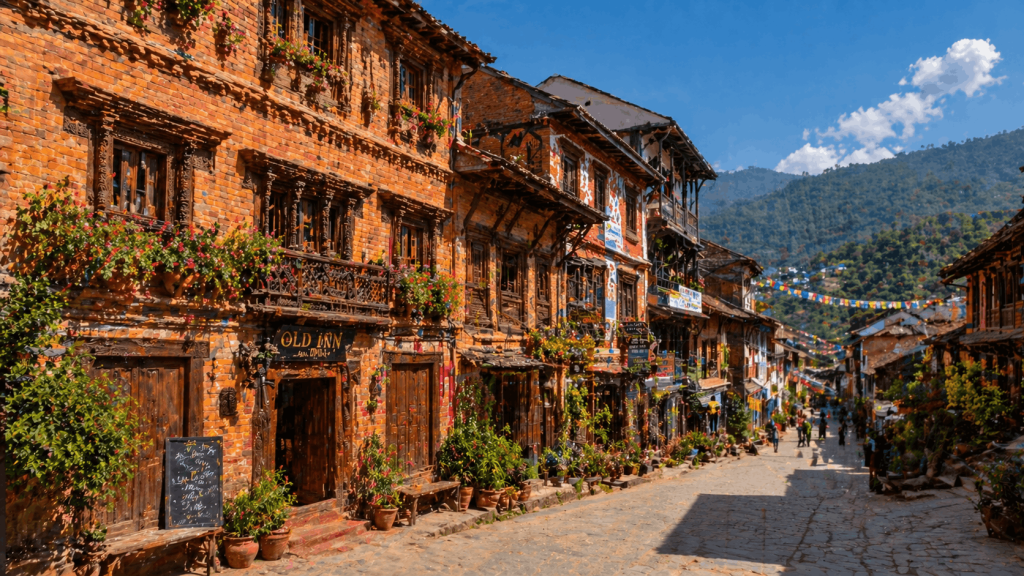
The above image is Ai generated for reference.
Bandipur’s story stretches back several centuries. Originally settled by the Newar community – the indigenous inhabitants of the Kathmandu Valley – it grew into a thriving trading post along the India–Tibet trade route during the 18th and 19th centuries. Merchants from across the subcontinent came here to trade cotton, spices, silk, and goods destined for Tibet.
At the height of its commercial glory, Bandipur was one of the most prosperous towns in the region. Its architecture reflects this golden era: grand three-storey bahals (courtyard houses), intricately carved wooden windows, stone-paved streets, and ornate temple facades that rival anything found in Kathmandu’s Durbar Squares.
The town began to decline economically when the Prithvi Highway bypassed it in the 1970s, diverting trade and travel to the valley below. Paradoxically, this abandonment became Bandipur’s greatest gift to the future: without economic pressure to modernise, the town’s architectural heritage was preserved almost perfectly.
Today, Bandipur is recognised as a model for cultural tourism in Nepal. The community has worked alongside conservationists to restore its buildings, ban motorised vehicles from the main bazaar, and create a living museum of Newari culture in the hills of Gandaki.
How to Reach Bandipur
Getting to Bandipur is straightforward from all the major tourist hubs in Nepal. Here’s a breakdown by origin:
From Kathmandu to Bandipur
Distance: Approximately 140 km | Travel Time: 5–6 hours
- Take the Prithvi Highway heading west toward Pokhara.
- Exit at Dumre, a small roadside town. This is the gateway to Bandipur.
- From Dumre, take a shared jeep or hire a private vehicle for the 8 km uphill drive to Bandipur town (approximately 30–45 minutes).
- Tourist buses and private vehicles from Kathmandu depart from Naya Bus Park (Gongabu) daily.
- Private car hire from Kathmandu costs approximately NPR 6,000–8,000 one-way.
From Pokhara to Bandipur
Distance: Approximately 42 km | Travel Time: 1.5–2 hours
- Head east on the Prithvi Highway toward Kathmandu.
- Exit at Dumre and take a local jeep up to Bandipur.
- This is the most popular route for travellers doing a Pokhara–Bandipur–Kathmandu loop.
- Shared vehicles from Pokhara depart from the main bus park area.
From Chitwan to Bandipur
Distance: Approximately 100 km | Travel Time: 3–4 hours
- Travel north from Chitwan (Sauraha) toward Mugling, then continue west on the Prithvi Highway to Dumre.
- A popular itinerary: Chitwan → Bandipur → Pokhara, covering Nepal’s scenic Terai-to-Hills transition.
Note: All vehicles stop at Bandipur Bus Park, located at the lower entrance of the town. From there, walk (or take a porter) up the 10–15 minute stone path to the main bazaar. No motorised vehicles are permitted beyond this point.
Places to Visit in Bandipur: Top Attractions
Bandipur’s beauty lies as much in its atmosphere as in its individual sights. Plan your visit around these key attractions:
1. Tundikhel Viewpoint
Tundikhel is an open plateau at the edge of Bandipur town that serves as both the local community ground and the town’s most celebrated viewpoint. On clear days – especially in October–November and February–March – you can see a dazzling panorama of the Annapurna massif, Machhapuchhre (Fishtail), Lamjung Himal, Baudha Himal, and Himalchuli, all stretching across the northern horizon.
Sunrise from Tundikhel is widely considered one of Nepal’s finest, with the peaks turning shades of amber, rose, and gold as the light breaks. Arrive by 5:30–6:00 AM for the best conditions. Photographers, take note: bring a wide-angle lens.
2. Siddha Cave (Siddha Gupha)
Located approximately 3 km from Bandipur town, Siddha Cave (also called Siddha Gupha) is one of the largest cave systems in Nepal. Stretching over 430 metres in length, the cave is adorned with spectacular stalactites and stalagmites that have formed over millions of years, some reaching heights of 15 metres.
The cave is sacred to both Hindus and Buddhists, with a small shrine at its entrance dedicated to Shiva. The name “Siddha” means “accomplished” or “divine” in Sanskrit. Local guides (available at the entrance for a small fee) carry torches and lead groups through the illuminated sections of the cave.
- Entry fee: Approximately NPR 200–300 (subject to change)
- Best time to visit: Morning, before afternoon humidity builds inside the cave
- How to get there: 45-minute walk or short jeep ride from Bandipur Bazaar
3. Bandipur Bazaar
The beating heart of Bandipur, the main bazaar is a 300-metre stretch of immaculately preserved Newari architecture. Walk slowly down the cobblestone lane and you’ll notice intricately carved wooden lattice windows (tikijhya), ornate doorways (toran), multi-tiered temple structures, and traditional shopfronts that once housed silk traders.
Today, these buildings contain boutique guesthouses, art galleries, organic cafés, and handicraft shops – but the bones remain untouched. The bazaar is car-free, giving it a rare tranquillity that feels almost cinematic.
In the evenings, the bazaar comes alive with locals gathering on stone benches, children playing in the open square, and the soft glow of traditional lanterns illuminating the stone walls. This is Bandipur at its most beautiful.
4. Thani Mai Temple
Perched atop the hill above Bandipur town, the Thani Mai Temple is dedicated to the local deity Thani Mai – a goddess revered as the guardian of the Bandipur community. The temple is reached by a steep but rewarding 30–40 minute hike through pine and rhododendron forest.
At the summit, the temple complex offers sweeping views over the Marsyangdi and Daraudi river valleys, with patchwork rice terraces and distant peaks completing the panorama. Puja (ritual worship) is performed daily, and the site is especially lively during festivals such as Dashain and Tihar.
5. Gurungche Hill
For the most rewarding hike in the Bandipur area, follow the trail to Gurungche Hill – the highest point accessible on foot from the town, rising to approximately 1,396 metres. The trail winds through traditional Gurung villages, terraced farmland, and forested ridgelines.
From the top, on a clear day, you can identify peaks including Manaslu (8,163 m), the Annapurna range, and the gentle curve of the Gandaki plains below. Budget 3–4 hours for a full round trip. Carry water and start early.
6. Silk Farm (Bandipur Silk Farm)
Bandipur has a small but significant tradition of silk weaving, rooted in its history as a trading post on the India–Tibet route. The local Silk Farm gives visitors a hands-on look at the traditional process: from silkworm cultivation to thread-spinning and loom weaving.
You can purchase locally produced silk scarves, fabric, and clothing at fair-trade prices directly from the farm. It’s one of Bandipur’s most unique cultural experiences, and a wonderful way to support the local artisan economy.
Local Experiences: Culture, Food, and Festivals in Bandipur
Newari Culture
Bandipur’s identity is inseparable from its Newar roots. The Newar people are renowned for their sophisticated traditions in art, architecture, cuisine, and ritual. In Bandipur, you can observe this culture in everyday life: in the carved wooden facades of the houses, in the offerings laid at temple courtyards each morning, and in the distinctive way that community life unfolds around the public square.
Engage with the locals at tea shops and you’ll often hear stories of family histories tied to trade routes, of great-grandparents who sold silk to merchants from Lhasa, and of festivals that have been observed without interruption for 300 years.
Local Food
Bandipur’s culinary scene is modest but memorable. Look for these local specialities:
- Newari Samay Baji: A traditional platter of beaten rice (chiura), roasted meats, spiced lentil cakes (bara), fermented vegetables (gundruk), and buffalo meat preparations. Best sampled at local restaurants or during festivals.
- Sel Roti: A sweet, ring-shaped rice bread, often served with tea in the mornings.
- Dhido: A traditional Nepali staple made from millet or buckwheat flour, served with gundruk soup and side dishes. Hearty and warming after a day of hiking.
- Milk Tea (Masala Chiya): The social glue of Nepal. Enjoy it at one of the bazaar’s street-facing tea stalls while watching the mountain light shift across the valley.
- Tongba: A traditional Himalayan millet beer served in a wooden vessel with hot water – warming on cool evenings.
Festivals
If you can time your visit with a local festival, do so. Bandipur’s festivals are community events of great colour and energy:
- Dashain (September–October): Nepal’s biggest festival. The town is decorated, rituals are performed at Thani Mai Temple, and families reunite.
- Tihar (October–November): The festival of lights. Bandipur’s bazaar glows with oil lamps, flower garlands, and flickering candles – a magical spectacle.
- Bisket Jatra: A Newari New Year festival celebrated in April with processions, music, and traditional rites.
- Maghe Sankranti (January): The winter harvest festival, with traditional foods and rituals.
Homestays and Community Tourism
Several Bandipur families offer homestay accommodation, providing an authentic window into Newari domestic life. Guests may join in meal preparation, participate in morning puja, walk through family farmlands, and share stories over shared dinners. These experiences are often the most memorable part of a Bandipur visit.
You Might Like: Pokhara Bucket List: Exciting Must-Do Adventures & Unforgettable Experiences
Best Time to Visit Bandipur: Season-by-Season Guide
| Season | Conditions & Recommendation |
| October – November (Autumn) | Best overall. Clear skies, Himalayan views, festivals (Dashain, Tihar). Peak season – book accommodation in advance. |
| December – February (Winter) | Cool to cold (nights near 5°C). Crisp mountain views. Fewer crowds. Pack warm layers. |
| March – April (Spring) | Rhododendrons bloom, pleasant temperatures (15–22°C), good hiking. Second-best season. |
| May – September (Monsoon) | Heavy rainfall, leeches on trails, reduced visibility. Not recommended for outdoor activities or mountain views. |
Summary: October through April is the best time to visit Bandipur, with October–November and March–April being the two prime windows. Avoid the monsoon months (June–August) unless you specifically enjoy the green, rain-washed landscape.
Where to Stay in Bandipur: Accommodation Guide
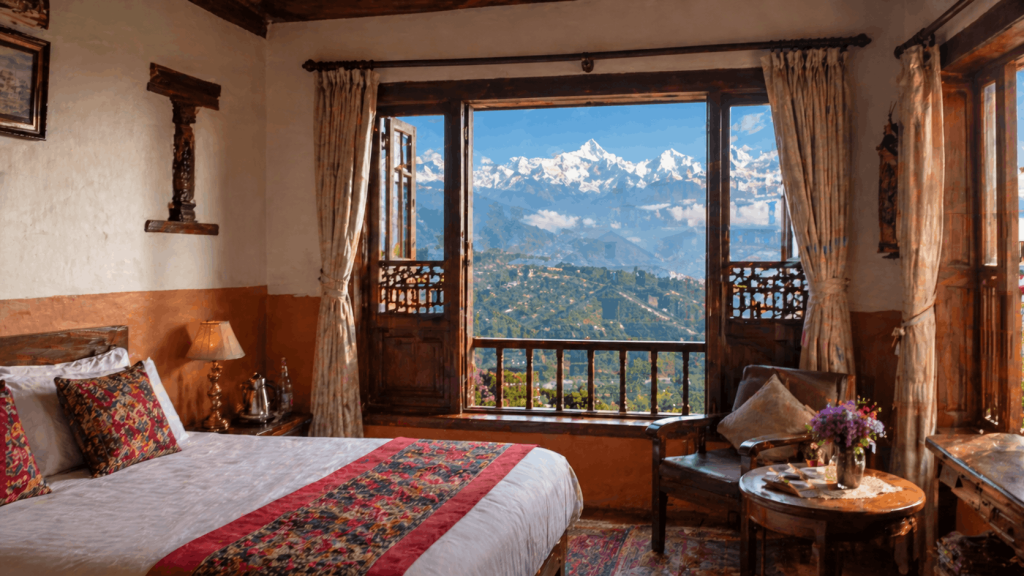
Bandipur has a growing but curated accommodation scene – no chain hotels or concrete resorts. Here’s what to expect:
Boutique Heritage Hotels
Several historic buildings in the bazaar have been lovingly converted into boutique hotels, retaining original carved woodwork, stone floors, and traditional décor while adding modern comforts. Price range: USD 40–120 per night. Examples of property types: heritage inn, hillside resort, or renovated merchant house.
Guesthouses and B&Bs
A wide range of mid-range guesthouses offer clean rooms, mountain views, and home-cooked meals. Most include breakfast. Price range: USD 15–40 per night. Ideal for budget-conscious independent travellers.
Homestays
For the most authentic experience, choose a community homestay. Host families provide rooms, meals, and a genuine cultural exchange. Price range: USD 10–20 per night, often including meals.
Booking tip: During peak season (October–November), reserve at least 2–4 weeks in advance. Bandipur’s accommodation capacity is intentionally limited to preserve the town’s character.
Bandipur Travel Tips: Do’s and Don’ts
Do’s
- Arrive early in the day to settle in before sunset – evenings at the bazaar are magical.
- Wake up before sunrise for the Himalayan view from Tundikhel – it is worth every early alarm.
- You can Carry cash (Nepalese Rupees). ATMs are also available in Bandipur town; and the nearest city is in Dumre.
- Hire a local guide for the Siddha Cave and Gurungche Hill hike – they add significant context and help with navigation.
- Respect local customs: ask before photographing people, dress modestly at temples, and remove shoes at shrines.
- Try the local food at family-run restaurants. The chiya shops in the bazaar are wonderful for people-watching.
- Support local artisans: buy directly from the silk farm, handicraft shops, and community cooperatives.
Don’ts
- Don’t bring motorised vehicles beyond the bus park. The bazaar is pedestrian-only – this is both a rule and a gift.
- Don’t litter. Bandipur’s cleanliness is community-maintained; leave no trace.
- Don’t visit only for one night. The town reveals itself slowly – two nights is the ideal minimum.
- Don’t skip the evening bazaar stroll. It’s the most authentic slice of daily life in Bandipur.
- Don’t rely on mobile data. Signal is limited. Use the time to disconnect.
Frequently Asked Questions (FAQs) About Visiting Bandipur
Below are the most commonly searched questions about Bandipur Nepal tourism, answered concisely for quick reference.
Q1. Why is Bandipur famous?
Bandipur is famous for its exceptionally well-preserved Newari architecture, pedestrian-only bazaar, stunning Himalayan panoramas, and authentic cultural heritage. It is widely regarded as one of Nepal’s most beautiful and unspoilt hilltop towns, earning it the nickname ‘the time-forgotten town.’
Q2. Is Bandipur worth visiting?
Absolutely. Bandipur offers a rare combination of cultural depth, natural beauty, and peaceful atmosphere that few destinations in Nepal can match. Whether you have one day or three, a visit to Bandipur consistently ranks among travellers’ most memorable Nepal experiences.
Q3. How many days do you need in Bandipur?
Two nights and two to three days is the ideal duration. This allows time for the main bazaar, Tundikhel sunrise, Siddha Cave, Thani Mai Temple hike, the Silk Farm, and a leisurely village walk – without rushing.
Q4. What is Bandipur known for?
Bandipur is known for its 18th-century Newari merchant town architecture, the dramatic views of the Annapurna and Manaslu Himalayan ranges, Siddha Cave (one of Nepal’s largest cave systems), and its car-free bazaar that has been preserved almost exactly as it was centuries ago.
Q5. How far is Bandipur from Pokhara?
Bandipur is approximately 42 km from Pokhara, taking about 1.5 to 2 hours by road via the Prithvi Highway. Exit at Dumre, then take a short jeep ride up the hill.
Q6. How far is Bandipur from Kathmandu?
Bandipur is approximately 140 km from Kathmandu, taking roughly 5 to 6 hours by road via the Prithvi Highway, depending on traffic and road conditions.
Q7. What are the best hotels in Bandipur?
Bandipur offers boutique heritage hotels, traditional guesthouses, and community homestays. Look for properties directly on the main bazaar with mountain views. Booking in advance is recommended during peak season (October–November and March–April).
Q8. What is the best time to visit Bandipur?
The best time to visit Bandipur is October to November (autumn) for clear skies and Himalayan views, or March to April (spring) for blooming rhododendrons and pleasant temperatures. Avoid the monsoon season (June–August) due to heavy rainfall and reduced visibility.
Q9. Are there ATMs in Bandipur?
Yes. There are ATMs in Bandipur town. And also the nearest town and ATMs are in Dumre (8 km below) or in Damauli. Its recommended to carry sufficient Nepalese Rupees before heading up to Bandipur if in case.
Q10. Can vehicles enter Bandipur Bazaar?
No. Motorised vehicles are not permitted in the main bazaar area. All vehicles park at the Bandipur Bus Park at the lower entrance, and visitors walk up via a stone-paved path (approximately 10–15 minutes). This policy is a key reason for the town’s tranquil atmosphere.
Q11. Is Bandipur safe for solo travellers?
Yes. Bandipur is considered very safe for solo travellers, including solo female travellers. The town is small, tight-knit, and community-oriented. Exercise standard travel precautions and inform your guesthouse of your hiking plans.
Suggested Internal Links and Resources
If you are building a travel blog or tourism website, consider linking to these related articles to improve topical authority:
- Things to do in Pokhara – for travellers combining Bandipur with a Pokhara visit
- Chitwan National Park Travel Guide – ideal for a Terai-to-Hills itinerary
- Nepal Tourism: Complete First-Timer’s Guide
- Best Hill Towns in Nepal to Visit
- Newari Culture and Architecture of Nepal
- Siddha Cave Nepal: Everything You Need to Know
External Resource Ideas (do not include specific URLs; link generically):
- Nepal Tourism Board official website – for visa, entry requirements, and current travel advisories
- Tanahun District Tourism Office – for local permits and updated attraction fees
- Nepal Meteorological Forecasting Division – for weather and seasonal travel planning
Why You Should Visit Bandipur?
In a world increasingly shaped by tourist crowds, Instagram-optimised viewpoints, and homogenised hotel chains, Bandipur stands as a quiet, confident exception. It asks nothing of you except the willingness to slow down and pay attention.
Here, history is not behind a velvet rope in a museum – it is under your feet as you walk the bazaar, in the woodwork above your hotel door, and in the faces of locals who have called this hill home for generations. The Himalayas don’t loom in the distance; they sit with you at breakfast, visible and enormous and humbling.
Whether you visit Bandipur as a day trip from Pokhara, a midpoint on the Kathmandu–Pokhara route, or a destination in its own right, you will leave with something rare: the quiet conviction that some of Nepal’s finest experiences require no entry fee, no extreme altitude, and no complex logistics. Just a willingness to arrive, look up, and let the mountains do the rest.
Plan your visit to Bandipur today – Nepal’s most enchanting hilltop town is waiting for you.