
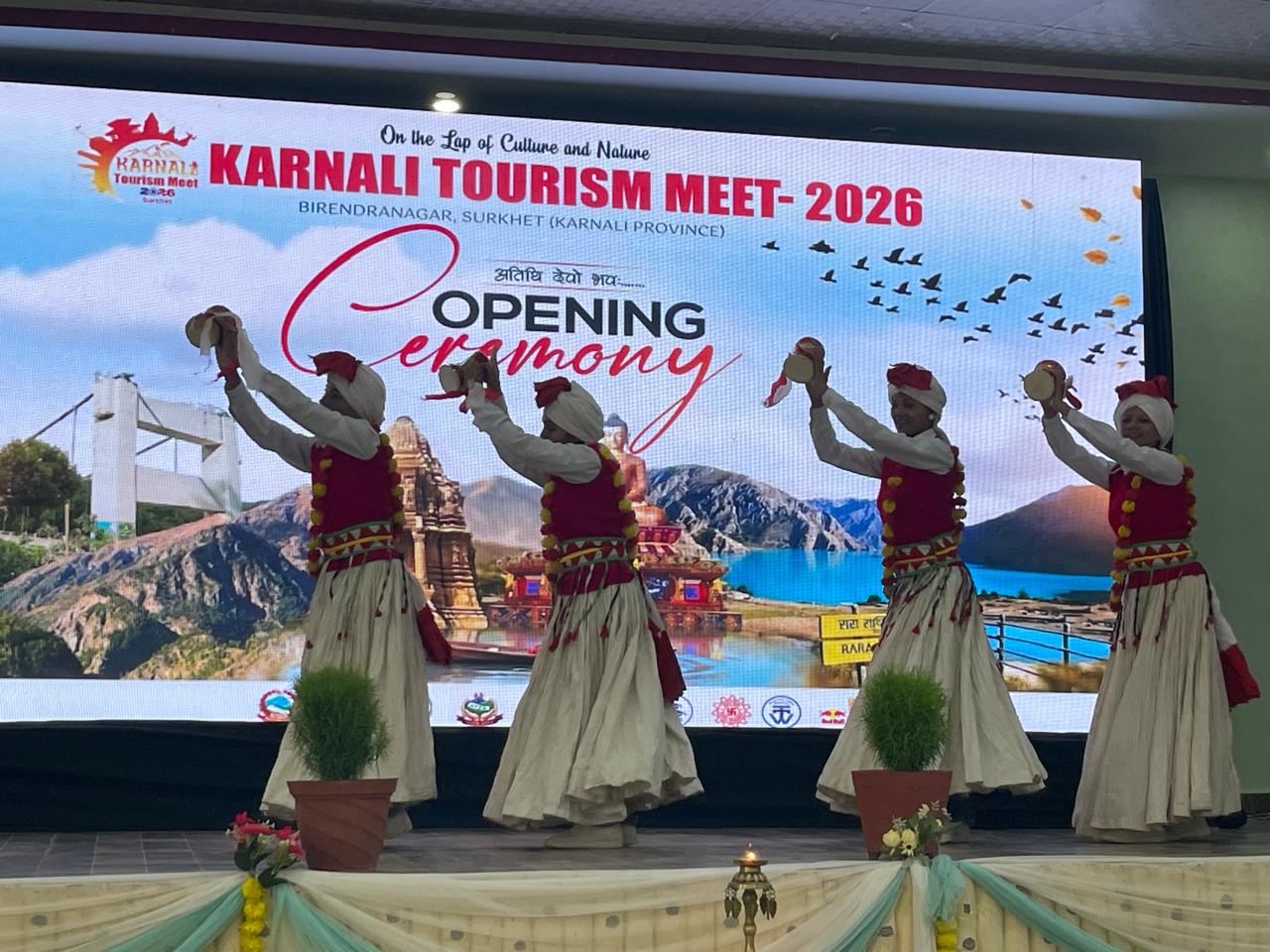
Kathmandu, Nepal – In a significant step toward promoting Nepal’s lesser-explored destinations on the international stage, the “Karnali Tourism Meet 2026” was successfully organized with grandeur, highlighting the rich heritage, culture, and tourism potential of Karnali Province.
Recognized as the cradle of ancient civilization, language, and history, Karnali Province stands as a symbol of Nepal’s authentic identity. From the majestic Rara Lake-the largest lake in Nepal-to the sacred routes leading toward Mount Kailash and Mansarovar in Tibet, Karnali represents a vast and diverse landscape filled with natural beauty and spiritual significance.
The event aimed to introduce Karnali’s unique tourism, culture, and history to a global audience. Organized with the support of the Nepal Tourism Board (NTB), the program brought together tourism stakeholders, cultural representatives, and local entrepreneurs under one platform.
According to NTB’s Officiating CEO, Mr. Hikmat Singh Ayer, the Nepal Tourism Board has been actively organizing tourism meets, marts, and promotional events across the country. He emphasized that such initiatives play a vital role in promoting Nepal’s tourism industry and expanding its global reach.
The Karnali Tourism Meet featured comprehensive exhibitions representing all ten districts of Karnali Province. Visitors experienced a vibrant display of local identity, including traditional foods, indigenous attire, music, and cultural performances. The event served as a powerful platform to showcase the region’s authenticity and untapped tourism potential.


About Karnali Province
Karnali Province, located in northwestern Nepal, is the largest province by area yet remains one of the least explored regions. Known for its rugged terrain, pristine landscapes, and deep-rooted traditions, Karnali offers a unique blend of adventure, spirituality, and cultural richness.
The province is home to Rara Lake, Shey Phoksundo National Park, ancient monasteries, and diverse ethnic communities that have preserved their traditions for centuries. Despite its remoteness, Karnali holds immense potential for eco-tourism, cultural tourism, and adventure tourism.
Often referred to as the “Land of Civilization,” “Land of Language,” and “Land of History,” Karnali reflects the origins of Nepalese identity. Its linguistic diversity, historical significance, and cultural depth make it a valuable destination for both domestic and international travelers seeking authentic experiences.
With improved connectivity and increased promotional efforts like the Karnali Tourism Meet, the region is gradually gaining attention as a must-visit destination.
The successful completion of Karnali Tourism Meet 2026 marks a new beginning in positioning Karnali Province as a key tourism hub in Nepal. Stakeholders expressed optimism that such initiatives will continue to uplift local communities and bring global recognition to the region.


