

From Trekking Porter to Tourism Entrepreneur: Samsher Parajuli on Nepal’s Untapped Tourism Potential
In an exclusive interview with PresentingNepal.com, Samsher Parajuli – founder of Global Holidays Adventure Nepal and Global Safaris Nepal – shares how he rose from porter to industry leader, and why Nepal must urgently reposition its tourism offerings to compete on the global stage.
Nepal’s tourism industry is often defined by the images of Everest base camp queues and Annapurna sunrises. But behind those iconic experiences is a broader, more complex sector – one that includes wildlife safaris, trophy game hunting, boutique trekking ventures, and the quiet revolution of digital marketing reshaping who reaches international travelers first. Samsher Parajuli, founder and managing director of Global Holidays Adventure Nepal and Global Safaris Nepal Pvt. Ltd., has witnessed every chapter of that evolution firsthand – starting as a porter on Lamjung’s trails in 2008 and building two thriving companies over the decade that followed.
In this wide-ranging conversation, he speaks candidly about regulated trophy hunting in Dhorpatan, the digital shift rewriting competitive advantage, and the concrete reforms Nepal needs to realize its full tourism potential.
AT A GLANCE
| Name | Samsher Parajuli |
| Companies | Global Holidays Adventure Nepal; Global Safaris Nepal Pvt. Ltd. |
| Role | Founder & Managing Director |
| Career start | 2008, trekking porter |
| Key areas | Adventure trekking, wildlife tourism, trophy hunting (Dhorpatan) |
| Hometown | Rainas-09, Lamjung District, Nepal |

From the Trails of Lamjung to the Boardroom: A Porter’s Journey
Samsher Parajuli’s entry into Nepal’s tourism industry was driven not by ambition alone but by practical necessity. After completing school at Bhairav Secondary School in Rainas, Lamjung, he moved to Kathmandu for higher education – and, like countless students from outside the Kathmandu Valley, had to earn his own way.
Q: How did your tourism journey begin?
“I began my career in 2008 as a trekking porter, carrying clients’ backpacks on the trails. From there I worked my way up – first as a trekking guide, then in office administration. By 2012, I had founded my own company, Global Holidays Adventure.”
That first mentor relationship proved decisive. His uncle, Mr. Raju Thapa, a well-known tourism entrepreneur in Thamel, gave Parajuli his introduction to the industry. The experience ignited a passion that drove him to launch not one but two companies. In 2014, two years after establishing Global Holidays Adventure, he founded Global Safaris Nepal Pvt. Ltd., a specialist operator in wildlife adventure and trophy game hunting at the Dhorpatan Hunting Reserve – Nepal’s only designated hunting territory. He has also operated hotels in Lazimpat and Sundhara.
| “When you enjoy your job, your career direction follows naturally.” |
Trophy Hunting in Dhorpatan: Nepal’s High-Value, Under-Discussed Tourism Segment
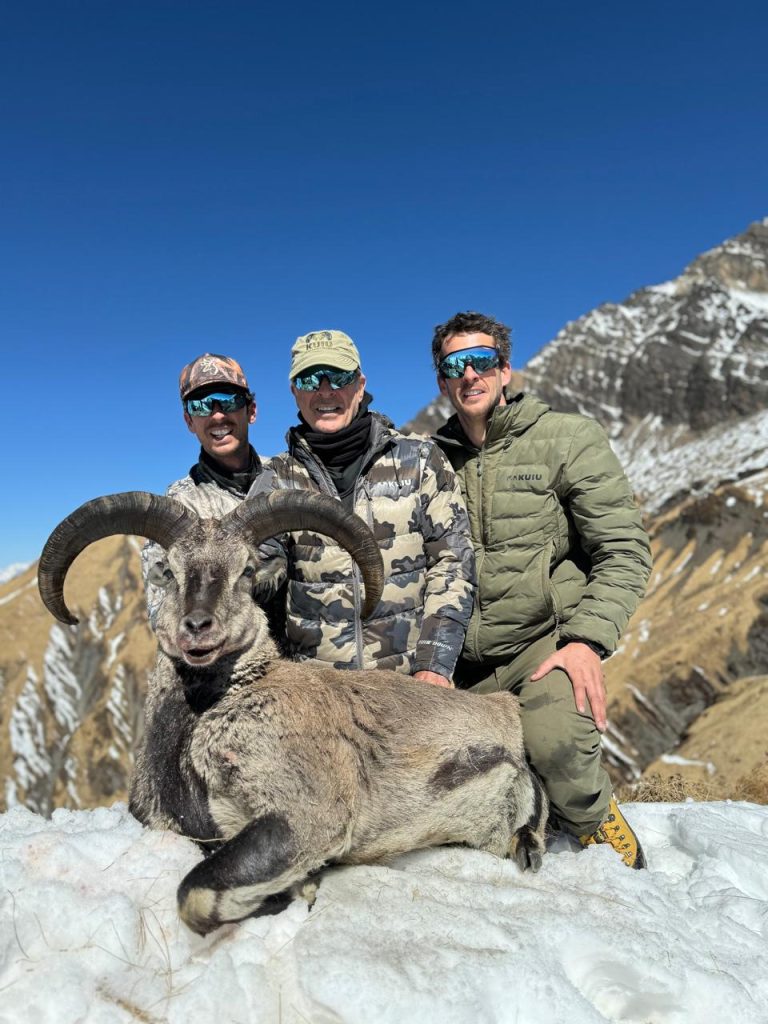
Nepal is globally synonymous with trekking and mountaineering. Yet within its wildlife sector lies a smaller, legally regulated, and economically significant niche: trophy game hunting at the Dhorpatan Hunting Reserve in the Dhaulagiri zone. Only four or five licensed outfitters operate here, under close government oversight by the Department of National Parks and Wildlife Conservation. In any given season, just 20 to 22 international hunters visit Nepal for this purpose – making it one of the most exclusive adventure products in the world.
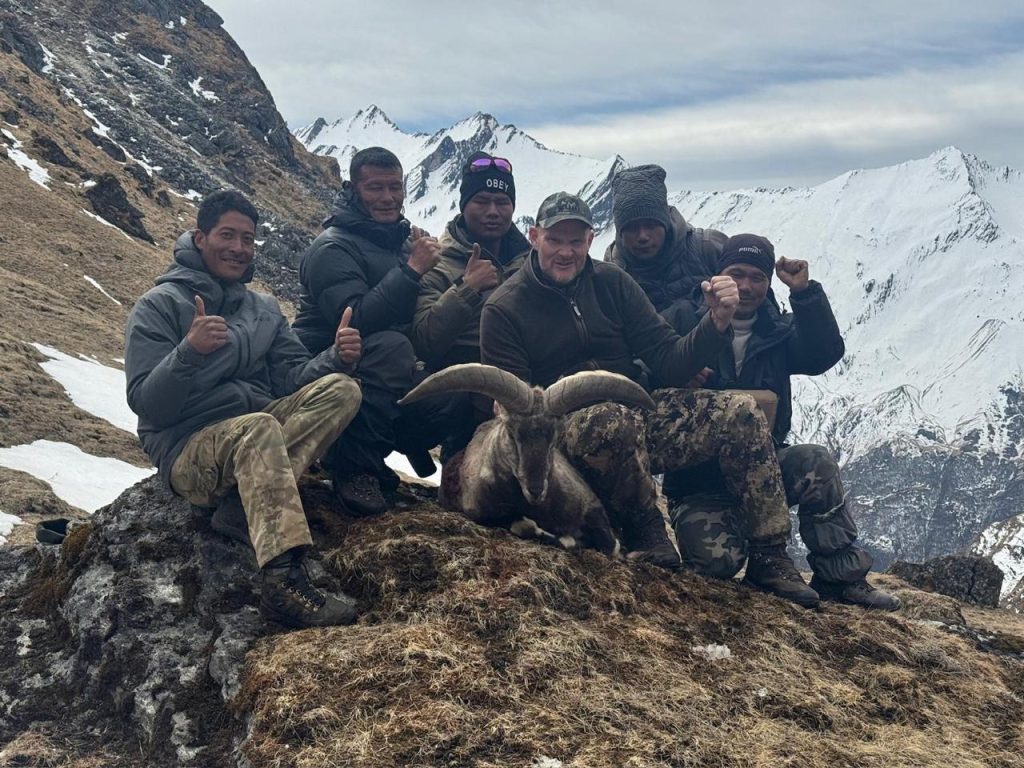
Q: What is the future potential of hunting tourism in Nepal?
“Nepal has gold and diamond in its tourism portfolio, but we are selling it at the price of turmeric,” Parajuli says bluntly. “Compare the cost of an Everest climbing permit to that of Mount Kilimanjaro – the gap is striking. The same logic applies to trophy hunting.”
He points to the broader global picture: an estimated one million international hunters travel for trophy hunting annually. Countries such as Pakistan, Mongolia, Kyrgyzstan, Kazakhstan, Tajikistan and Russia have been actively expanding their share of this market – while Nepal’s relative share is shrinking. His prescription is direct: responsibly expand hunting areas, broaden permitted species under scientific monitoring, and price permits closer to global benchmarks.
Regulated Hunting as a Conservation Tool
The link between regulated trophy hunting and conservation is one Parajuli returns to repeatedly – and it is supported by a significant body of international evidence. Permit fees and trophy fees flow directly into anti-poaching operations and habitat protection. In Dhorpatan, he says, regulated hunting has demonstrably helped suppress illegal poaching. The operations also provide direct local employment: more than 20 people from surrounding communities work with his team during hunting seasons.
The government currently earns several hundred thousand dollars in revenue from trophy hunting each season, across spring and autumn operations. With careful expansion and better pricing, Parajuli argues that contribution – to conservation, local livelihoods and the national exchequer – could grow many times over.
| “The real conservationists, in many parts of the world, are hunters – because their permit fees directly fund anti-poaching operations and habitat protection.” |
Digital Marketing and the New Competitive Landscape for Nepal Tourism
Q: How has Nepal’s tourism industry changed in recent years?
“The biggest change is the rise of digital marketing and social media as the primary platforms for promoting tourism,” Parajuli says. “A decade or two ago, our industry relied heavily on email enquiries and word-of-mouth referrals. Today, social media is the number one channel.”
This shift has levelled the playing field in ways previously unimaginable. Newly established companies, often founded by entrepreneurs in their twenties and thirties, are successfully competing with legacy operators because they understand digital platforms intuitively. International tourism trade shows have also grown in importance as relationship-building and lead-generation venues.
The modern traveler, Parajuli observes, is fundamentally different from those of a decade ago. They research independently before making contact, expect rapid responses, and seek authentic, personalized experiences rather than off-the-shelf packages – and they are willing to pay a premium for quality. Operators who have adapted – building a credible digital presence and offering genuinely tailored service – are positioned to lead Nepal’s next phase of tourism growth.
Building a Stronger Nepal Tourism Industry: Three Priorities
Q: What must Nepal do now to strengthen its tourism industry?
Parajuli’s prescription for Nepal’s tourism future is built around three interconnected priorities.
1. Diversify the Tourism Product
Nepal cannot afford to rely indefinitely on Everest and the Annapurna Circuit. Regions such as Manaslu, Kanchenjunga, Dolpo and Api in the far west offer equally compelling trekking experiences but remain under-developed in terms of trail infrastructure, certified guide availability and reliable rescue arrangements. Broadening the adventure portfolio – including rafting, mountain biking and paragliding – must be backed by international-standard safety and insurance frameworks.
In wildlife tourism, Nepal’s success with tiger and rhino conservation is genuinely world-class. Parks such as Bardiya, Shuklaphanta and Koshi Tappu hold significant potential that is currently under-exploited. Packaging that conservation success story for high-end naturalist travelers represents a clear revenue opportunity.
2. Raise Professional Standards
Safety standards and guide certification must be tightened consistently across the sector. Overseas agencies and international insurance providers make booking decisions partly on the basis of perceived risk; robust, verifiable safety frameworks build that trust. “From my own years of running treks, I can say that one well-handled emergency builds more credibility than ten brochures,” Parajuli notes.
He also calls for action on unregistered operators undercutting legitimate companies on price, inconsistent hotel grading, and airport delays – issues that continue to undermine Nepal’s reputation among repeat and high-value visitors.
3. Promote Nepal More Intelligently
Targeted digital campaigns aimed at Nepal’s proven source markets – Germany, the UK, the United States, Australia, Japan and South Korea – deliver a far stronger return than generic global branding. The Nepal Tourism Board and the private sector, he argues, must coordinate far more closely on campaign strategy and market intelligence.
He also highlights two under-used assets: the new international airports at Pokhara and Bhairahawa (whose potential depends on resolving current air-route connectivity issues and attracting direct flights from key markets), and the Nepali diaspora – a globally distributed, travel-motivated community that remains “one of our most enthusiastic but underused promotional assets.”
| “Nepal’s tourism has come a long way since I started in 2008. With better coordination between government, industry and local communities, I believe the next decade can be genuinely transformative.” |
Conclusion: Nepal’s Tourism at an Inflection Point
Samsher Parajuli’s career arc – from porter to founder, from a single backpack to two companies – mirrors Nepal’s own tourism journey: built on extraordinary natural assets, driven by individual enterprise, and now facing the strategic choices that will determine whether it captures its full potential or continues to undervalue what it has.
His message to policymakers is clear: Nepal is sitting on some of the world’s most prized tourism products. The task now is not to invent new ones, but to present, price and manage the existing ones with the sophistication they deserve.
| ABOUT THE INTERVIEWEE Samsher Parajuli is the Founder and Managing Director of Global Holidays Adventure Nepal and Global Safaris Nepal Pvt. Ltd. He began his career as a trekking porter in 2008 and has since built a diversified tourism portfolio encompassing adventure trekking, wildlife safaris, trophy hunting operations in the Dhorpatan Hunting Reserve, and hotel management in Kathmandu. He is based in Kathmandu, Nepal. |


